Balcony Bliss: Get Gardening this Spring
August 20, 2026
Transform your balcony into a gardener’s paradise.
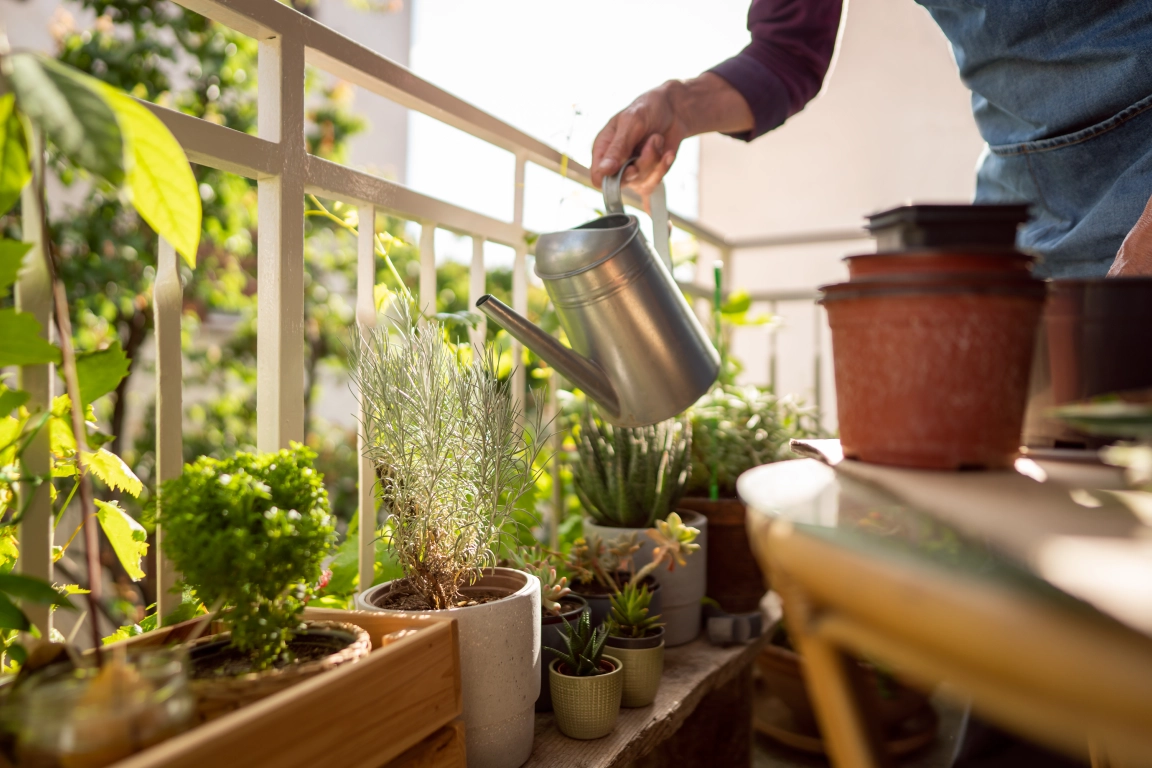
Does your apartment suite include a balcony? Lucky you! A balcony can be so much more than just an outdoor space. In fact, it’s the perfect spot to create a personal retreat with a lush balcony garden.
Balcony gardens don’t have to be big, to be beautiful. It’s a great example of small-space decorating that can turn even a tiny outdoor area into something inviting and full of life. With a few containers, the right plants for the amount of sunlight you get where you live, and a simple watering routine, you can turn your balcony into a relaxing green space that’s perfect for your morning coffee break, growing fresh herbs, and creating a little extra calm at home.
A balcony garden apartment setup can be surprisingly lush, inviting, and relaxing when you design it to fit your space and lifestyle. Whether you want a small herb corner, a wall of leafy greens, or year-round colour, it’s one of the easiest ways to personalize your outdoor space and make your apartment feel even more like home.
In this guide, we’ll walk through smart, renter-friendly ways to maximize space for your balcony garden, choose apartment-friendly plants, and even plan for winter so your balcony still looks great when temperatures drop.
Before you start turning your balcony into a green escape, check your rental lease for any balcony restrictions. Your building might have regulations about what can be stored, installed, or attached outdoors. Some apartment properties have limits on drilling or mounting items, using certain types of furniture, or keeping bulky or flammable materials on balconies. This isn’t the most exciting step, but it’s a smart one that keeps you safe and prevents wasted time and money.
It’s almost time to start looking at pots and plants, but first, take a quick look at what your balcony naturally offers.
Once you know your balcony conditions, you can choose plants that thrives without constant fuss (unless you love the idea of high-maintenance apartment balcony gardening).
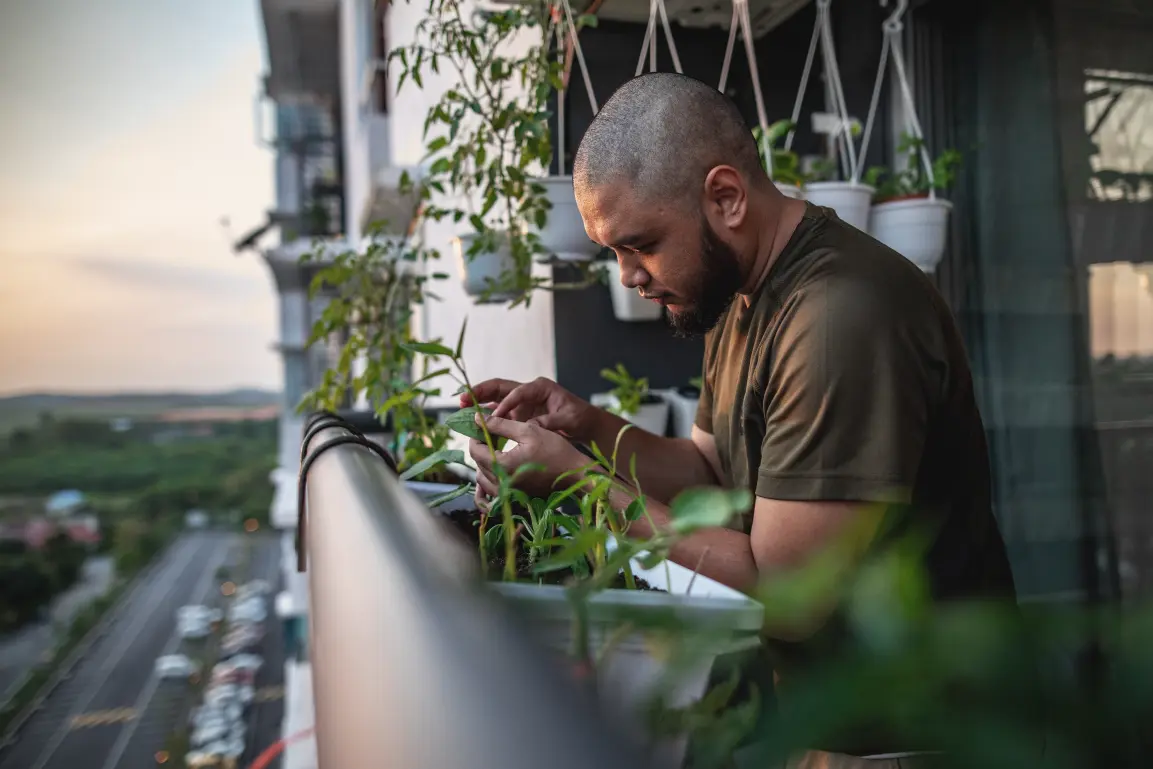
The secret to a successful balcony garden isn’t having more square footage; it’s using the space strategically. Instead of relying only on floor pots, focus on growing upward and using edges.
A vertical garden for an apartment balcony uses height to expand your growing area. With this method, you grow plants upward along a wall using specialized planters, modular systems, or trellises, turning a blank surface into a vibrant, living tapestry that is not only eye-catching but apartment-friendly. Remember to check your lease to see what installations are permitted in your building.
There are a few reasons why a vertical garden is perfect for a balcony:
If you’re new to vertical gardening, start simple: a trellis with a few climbing plants or a modular vertical planter with herbs and trailing greens are both beginner-friendly options.
Plant stands are specially designed shelves that can be placed anywhere on your balcony. They come in a variety of shapes and sizes, some perfect if you need just that extra bit of space in the corner, and others if you want an eye-catching feature. Many plant stands come with wheels, to make for easy movement around your balcony. Plant stands are an excellent small balcony garden idea because they add significant growing area without wasting floor space with bulky containers. With a plant stand, design looks intentional, with dynamic layers to ensure every plant gets sunlight, and creates spatial depth in your balcony space.
Plant stands are also perfect for creating a lush look with layers. Some plant stands come with a ‘hanging bar’ at the top so you can create dimensions with your plant designs. Put larger, fuller plants on the lower shelves and hang smaller trailing plants from the top. With this design, you can create a multi-level display that draws the eye upward and frees up precious floor space.
Plant stands have multiple benefits:
Tip: To make the most of your plant stands, focus on weight distribution, plant light requirements, and drainage. Place heavier, larger pots on the bottom tiers and reserve top shelves for small or trailing plants. Also, plan for frequent watering in the summer. Hanging pots can dry out quickly.
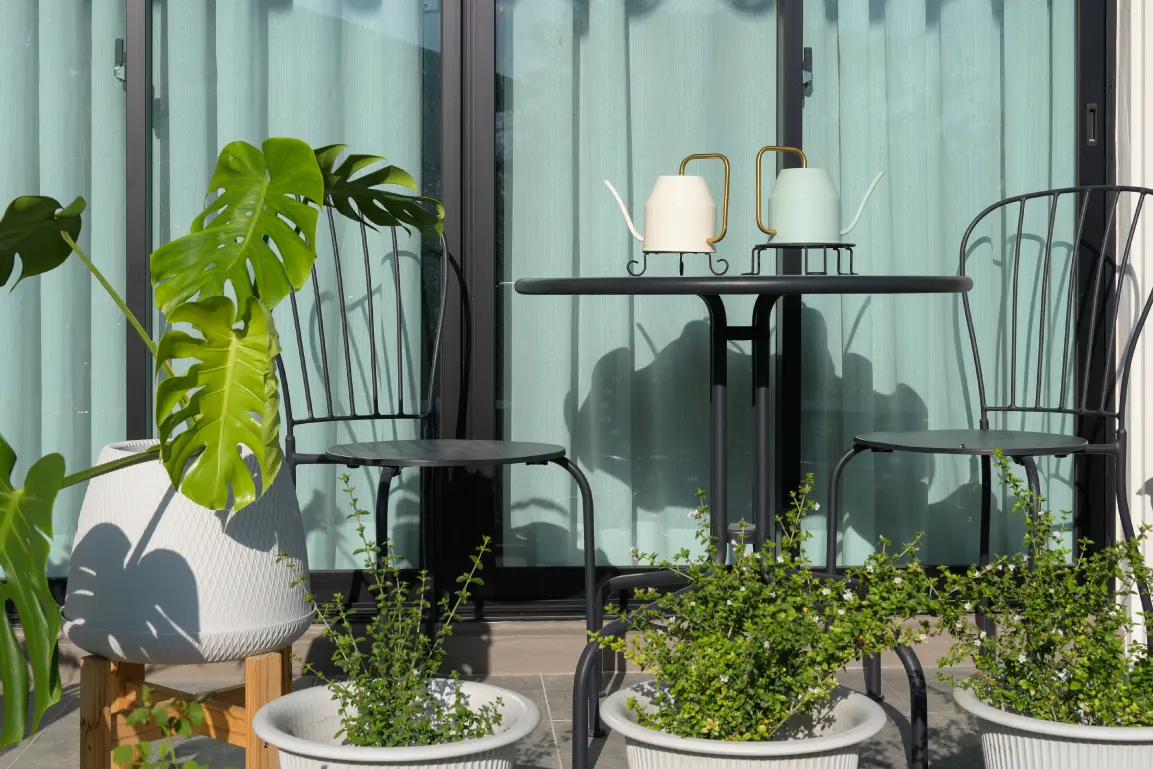
How do you want to move on your balcony? Do you want your plants to be functional (e.g., provide cooking herbs) or purely aesthetic? And importantly, if you let your pet onto your balcony, you’ll only want plants that are pet-friendly. The plants you choose for your balcony garden should match your lifestyle and capabilities. If you love cooking, prioritize herbs. If you want colour, choose flowering plants. If you travel often—or if you already know you’ll likely forget to water—choose hardy, forgiving options.
This is where low-maintenance, apartment-friendly plants come in: varieties that do well in containers tolerate balcony conditions, and won’t wither away if you miss a day of watering.
Here’s an easy balcony garden design idea that’s appropriate for most renters:
If your balcony gets strong sun, you’ll have ample options, but even shaded balconies can be beautiful with the right choices.
If you’d like your balcony to stay inviting year-round, consider adding plants that can handle a Canadian winter. Many container plants won’t make it through freezing temperatures, but there are several balcony-friendly options that can still brighten your space in colder months.
These plants not only survive but thrive in winter:
Remember that a balcony garden should feel relaxing, not like a chore list. A few small habits make a big difference:
If you want the lowest maintenance route, choose a smaller number of larger containers rather than many tiny ones. Larger pots hold moisture longer and are more forgiving.
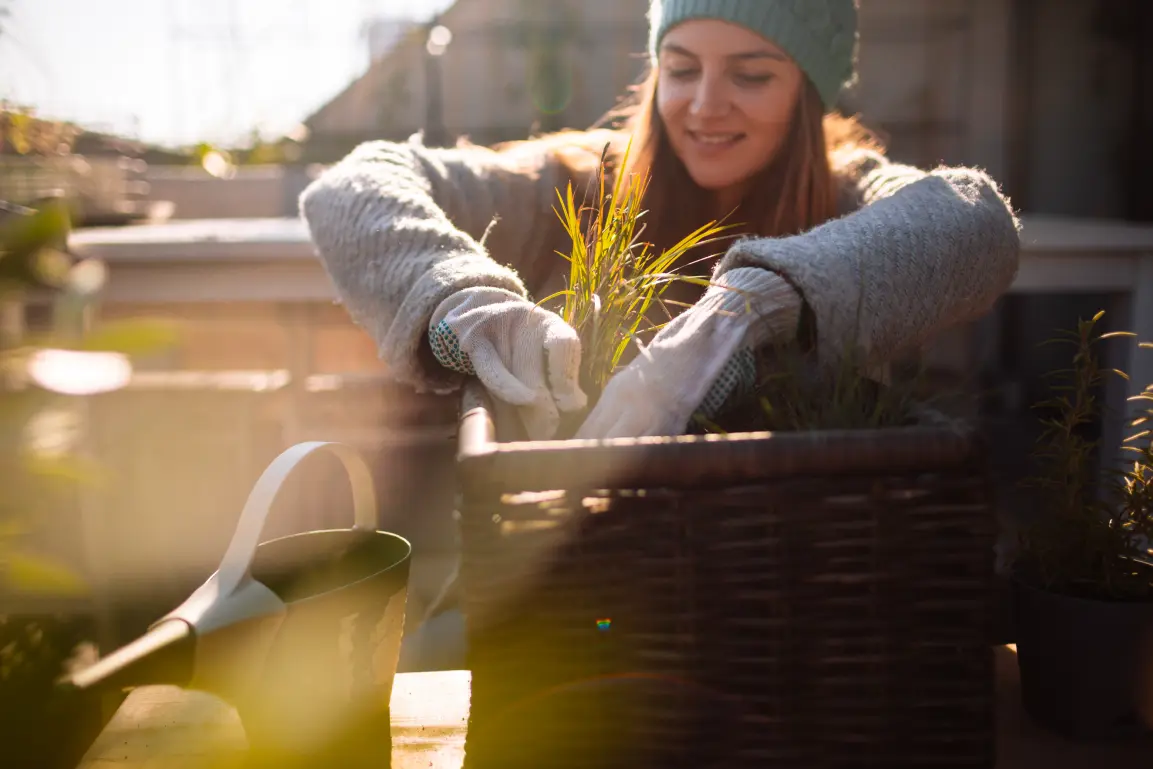
You don’t need a huge budget or expert knowledge to design a beautiful balcony garden. All it takes is some thoughtful planning, a smart layout, and plant choices that fit your space and lifestyle. By using vertical solutions, plant stands, and hanging garden systems—whatever's permitted at your building—you can transform an ordinary balcony into a green retreat. And with hardy winter options, you can keep colour and structure going even in the colder seasons.
Whether you're building your first balcony garden apartment setup or looking to upgrade, start small, build upward if possible, and choose plants you genuinely enjoy. Your future self, your balcony, and maybe even your neighbours will thank you for creating a vibrant outdoor space.
Want to share how your balcony garden looks? We’d love to see – share with us on our social media @skyline_living
Looking for the perfect balcony apartment for your garden? Take a look at our properties to pick your new home
Tapping into your green thumb? Check out more tips for gardening in our blog “ Balcony Bliss: Get Gardening This Spring ”
August 20, 2026
August 13, 2026
July 30, 2026
July 30, 2026
July 29, 2026
July 13, 2026